Overview
For Project Osiris, two pintle injectors were designed and manufactured: one for the ablative chamber, and one for the regenerative chamber. Each injector was composed of three parts (baseplate, centerbody, pintle tip) but only the baseplate was different across the two designs. Since the goal of the project is the regenerative chamber (see Ablative Chamber for the reason behind the ablative), this page will focus on the regenerative injector variant (see bottom for Ablative info).
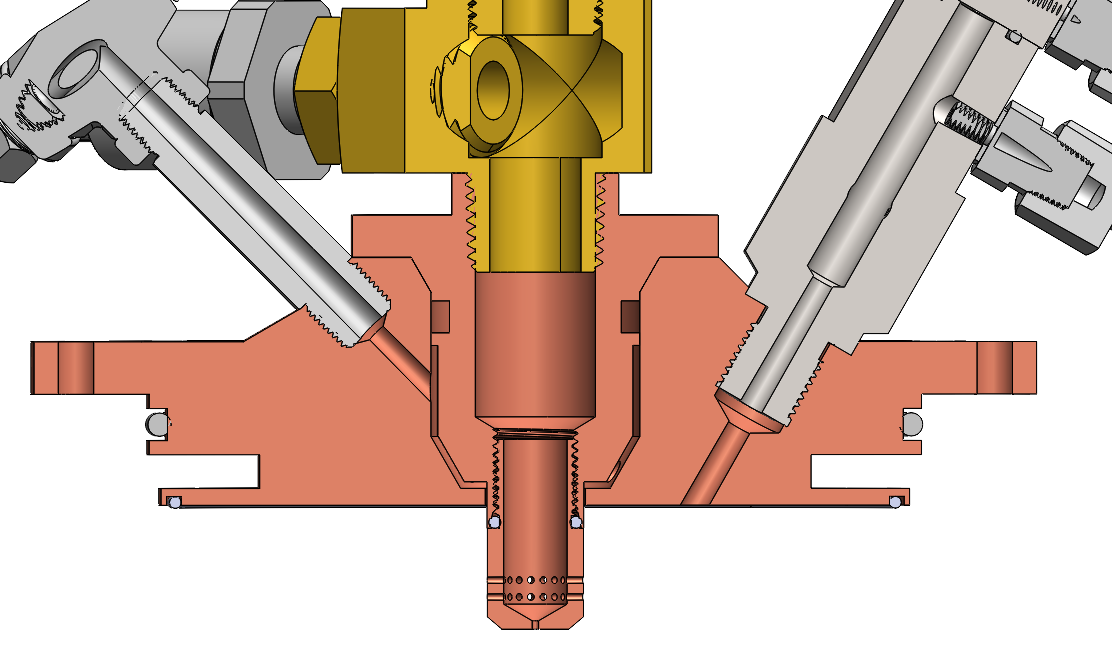
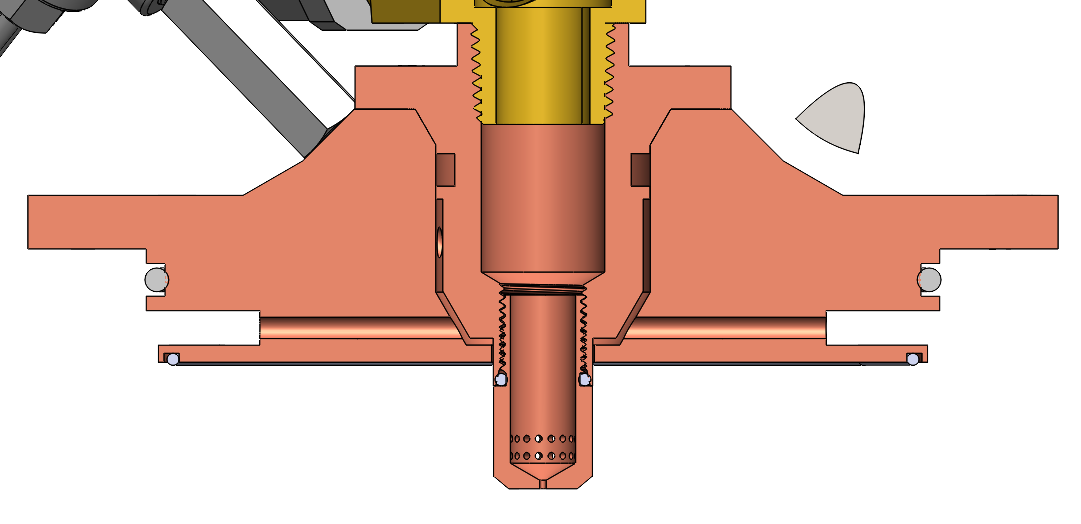
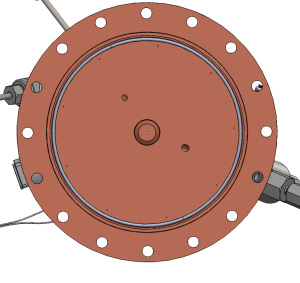
In these cross sections showing the regenerative injector assembly, the three components that make up the injector can be seen (baseplate, centerbody, pintle tip). The pintle tip threads into the centerbody via an a 5 (1/2" 20 Thread) ORB fitting. The centerbody interfaces with the baseplate via a bolted taper, which we chose to mitigate pintle concentricity issues. However, we still shim the annulus during assembly to eyeball concentricity. Our annular gap is 0.01".
...
In the assembly, there is one face seal, which interfaces with the combustion chamber. We were a bit concerned that there would be plastic deformation here when torquing the bolts, as we sized the injector such that the face with the face seal on it contacts the chamber before the injector flange contacts the chamber flange. However, we were able to validate that the lip with the face seal on it would not snap or plastically deform with +/- 0.002" tolerances.
Ablative Injector
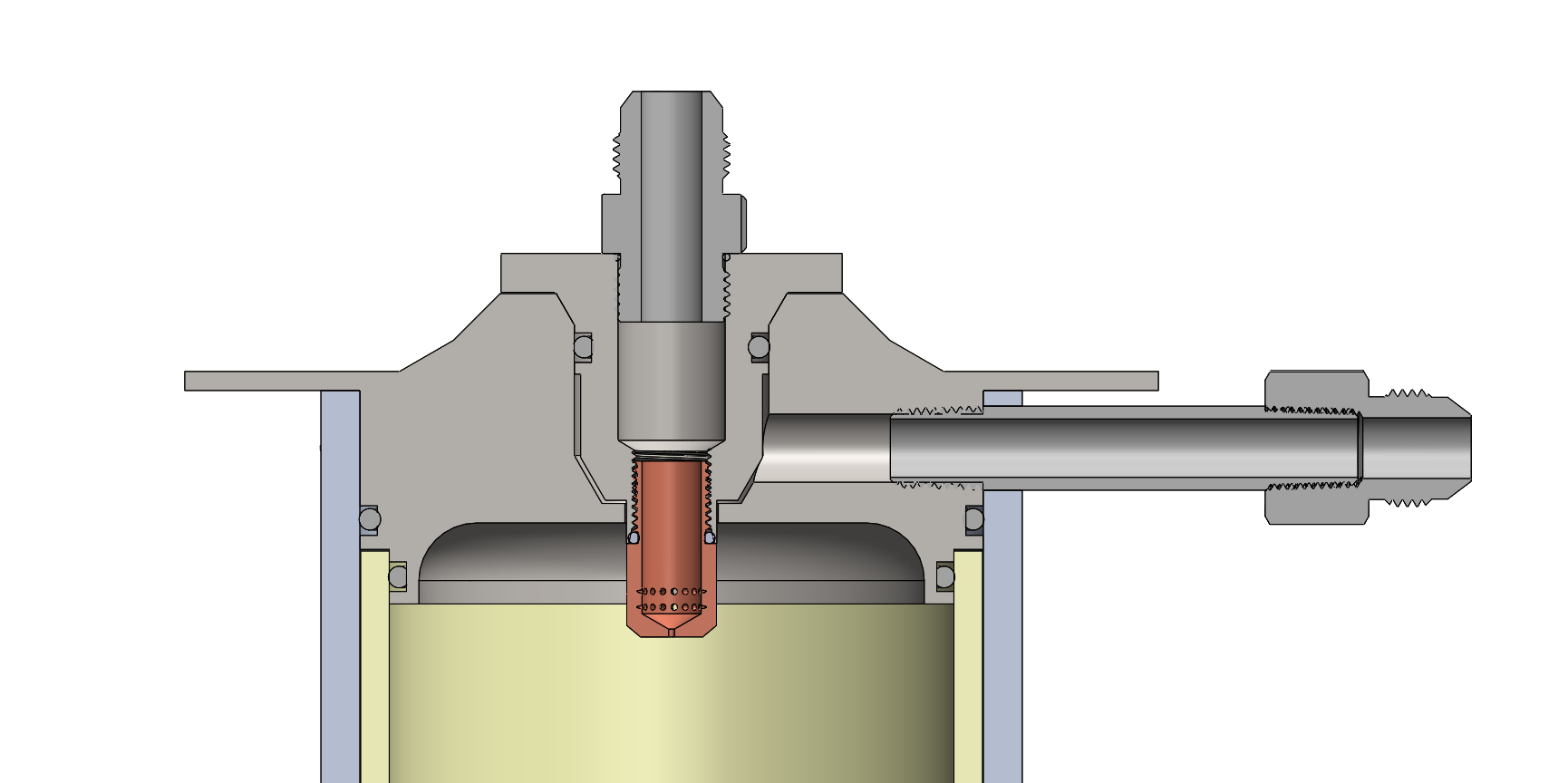
The injector was fully designed and spec'd for the regenerative chamber and then modified to fit the ablative system. The main modifications were to remove the radial holes for fuel passthrough and face seal flange. Instead, fuel enters through a port on the side of the chamber (think only one radial fuel through hole), and there are a pair of face seals (one for ablative liner one for chamber wall) in place of the face seal + radial seal on the regen. Since the ablative chamber is not designed to run at steady-state, this baseplate was machined out of steel to function as a high-temp heat sink. See CAD below:
Note:
For the actual ablative injector the NPT fitting at the top of the centerbody was replaced with an ORB due to that fitting being removed often. The centerbody was also made out of copper since the steel regen centerbody was dropped, and so the copper part intended for the regen injector was used instead (it is the same part dimensions exactly).
Additionally, the ablative chamber flange was too thin (somehow slipped under the radar through both PDR and CDR), and so a thick steel supporting plate was added during engine integration, sitting "on top" of the injector.