President: Andrew Bromberger
VP: Reva Mathankar
Chief Engineer: Conrad Casebolt
Aerodynamics and Control: Olivia Garcia
Avionics: Jack Bolte
Structures: Sydney Parke
Solid Propulsion: Ezra Eyre

(Depiction of Zephryus Full Launch Configuration; SolidWorks CAD)
Project Zephyrus is MIT Rocket Team HPR Division's high-altitude rocket project for the 2025-26 school year. The stated project goal is to launch a rocket to 100,000 feet – a new team altitude record – requires the development of a P-class motor. The project also aims to successfully implement an active roll control system, fly a student-designed flight computer with live video, and recover the vehicle in a reflyable condition. The vehicle has a "test launch" and a "full launch" configuration. The test launch configuration features an experimental airbrakes module, while the full launch configuration does not use the airbrakes module.
The development of a roll control system guided by a custom flight computer necessitated the development of a technology demonstrator. Project Xanthus was the roll control campaign in the Fall of 2025 and IAP of 2026. This project was a separate, L2-sized flight vehicle designed over the summer of 2025. More information about Xanthus can be found here (link to be added in the future).
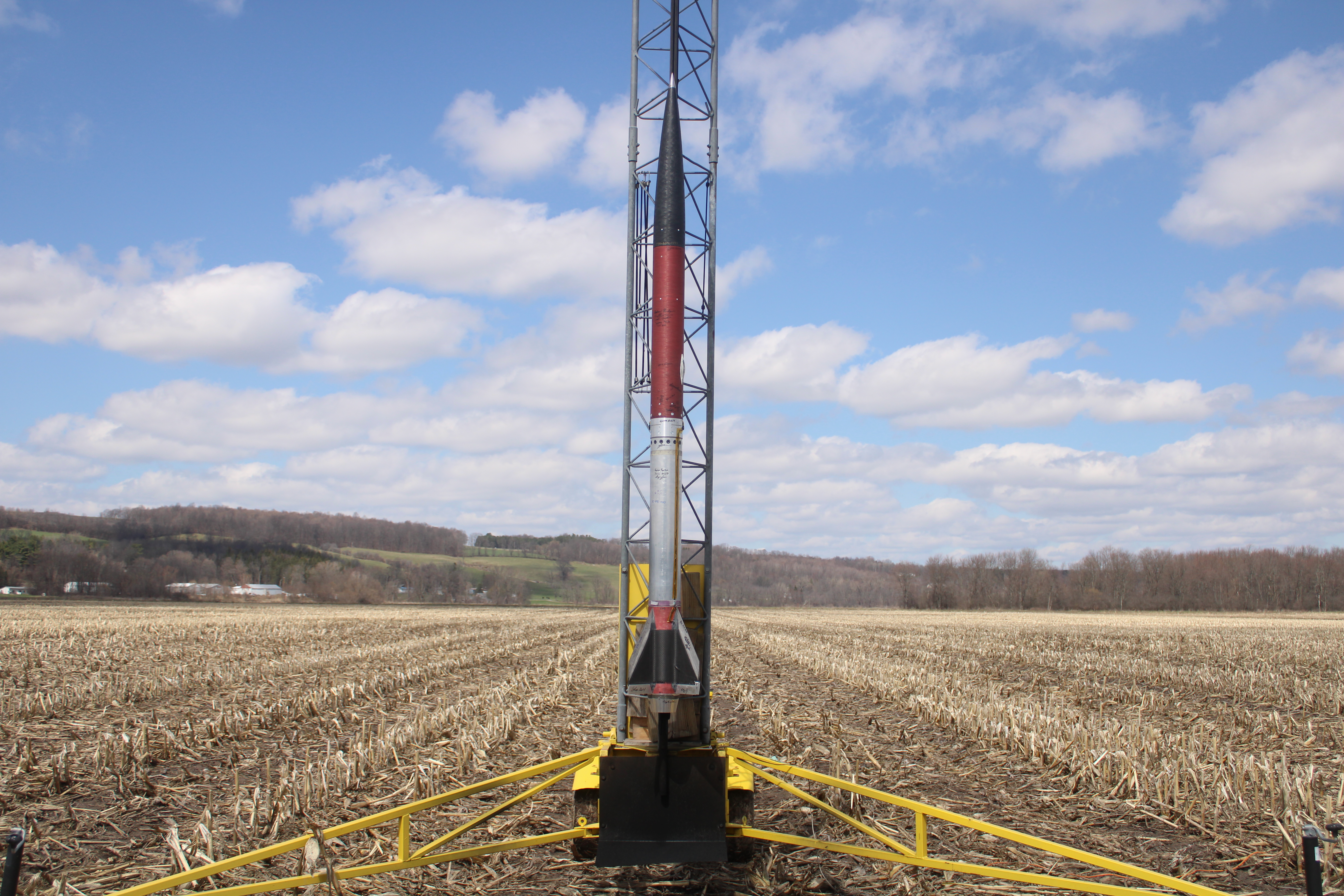
(Zephyrus Vehicle in Test Launch Configuration; 11 April, 2026)
As of May 3, 2026, the project is on pause as the team leadership transitions. The latest project milestone is the launch of Zephyrus in the test launch configuration on April 11, 2026 on an N9559 motor (SRAD; 55% N). Zephyrus reached a maximum altitude of 14,900 feet AGL, a maximum speed of Mach 1.2, and a maximum acceleration of 34.7 G. The vehicle landed on only the drogue parachute due to a main deploy anomaly. The ground impact compromised two fins and the camera SD cards. Roll control oscillated the vehicle around the commanded setpoint until aerodynamic forces near max Q disconnected the physical wire connections between the flight computer and the servo. The vehicle transmitted live video to all ground stations nominally until the main parachute deployment was commanded at 1500 feet AGL. The project continued after leadership deemed that repairs during the remainder of the school year were feasible.
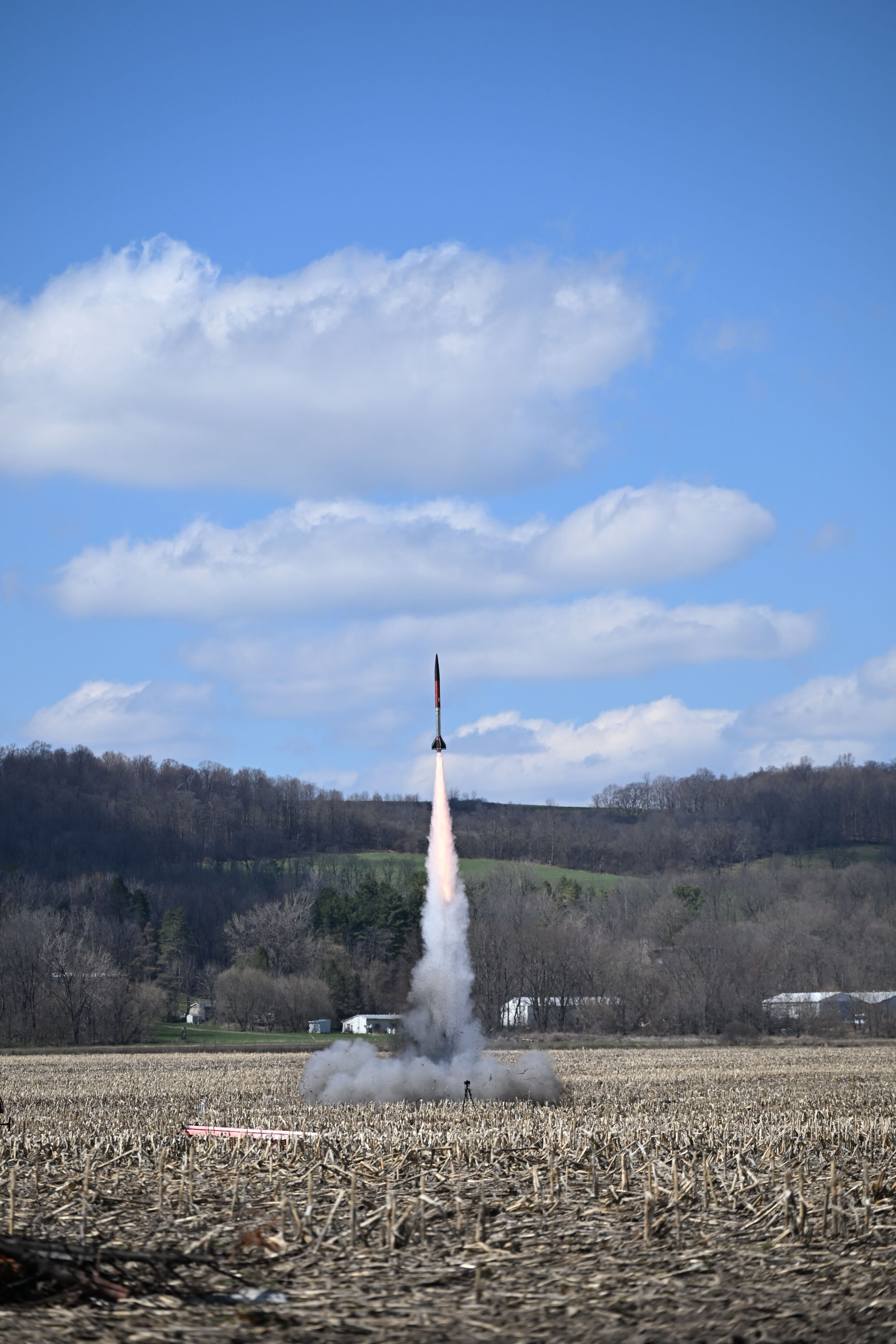
(Test Launch "Money Shot" from launch complex; 11 April, 2026; PC: Jules Dail)
The project was paused on May 3, 2026 after a malfunction at the P Motor "Persephone II" static fire test. The redesigned motor experienced a full burn through three inches below the forward closure, and at T+3.5 seconds, the aluminum case was compromised by a hot gas jet.
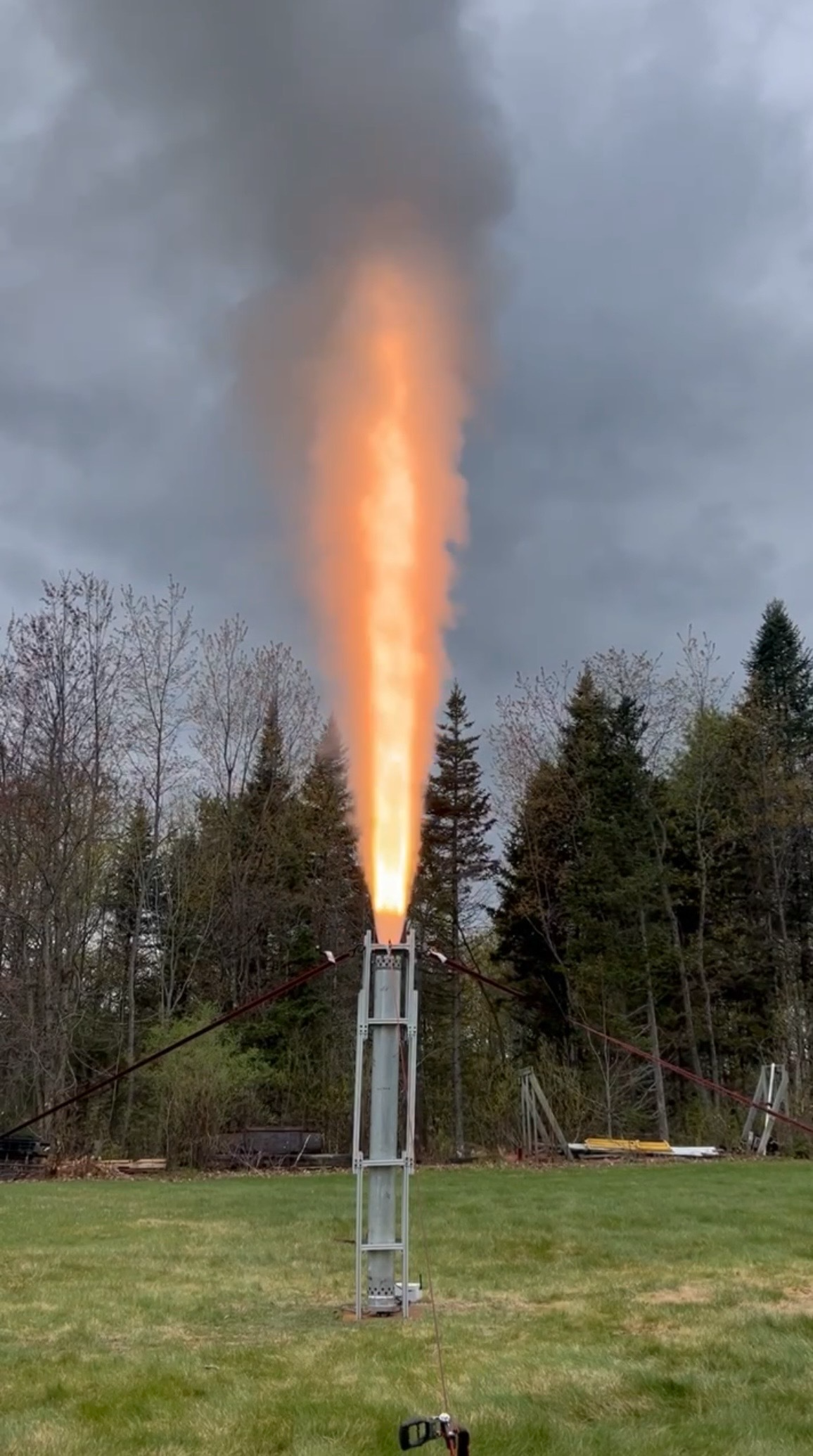
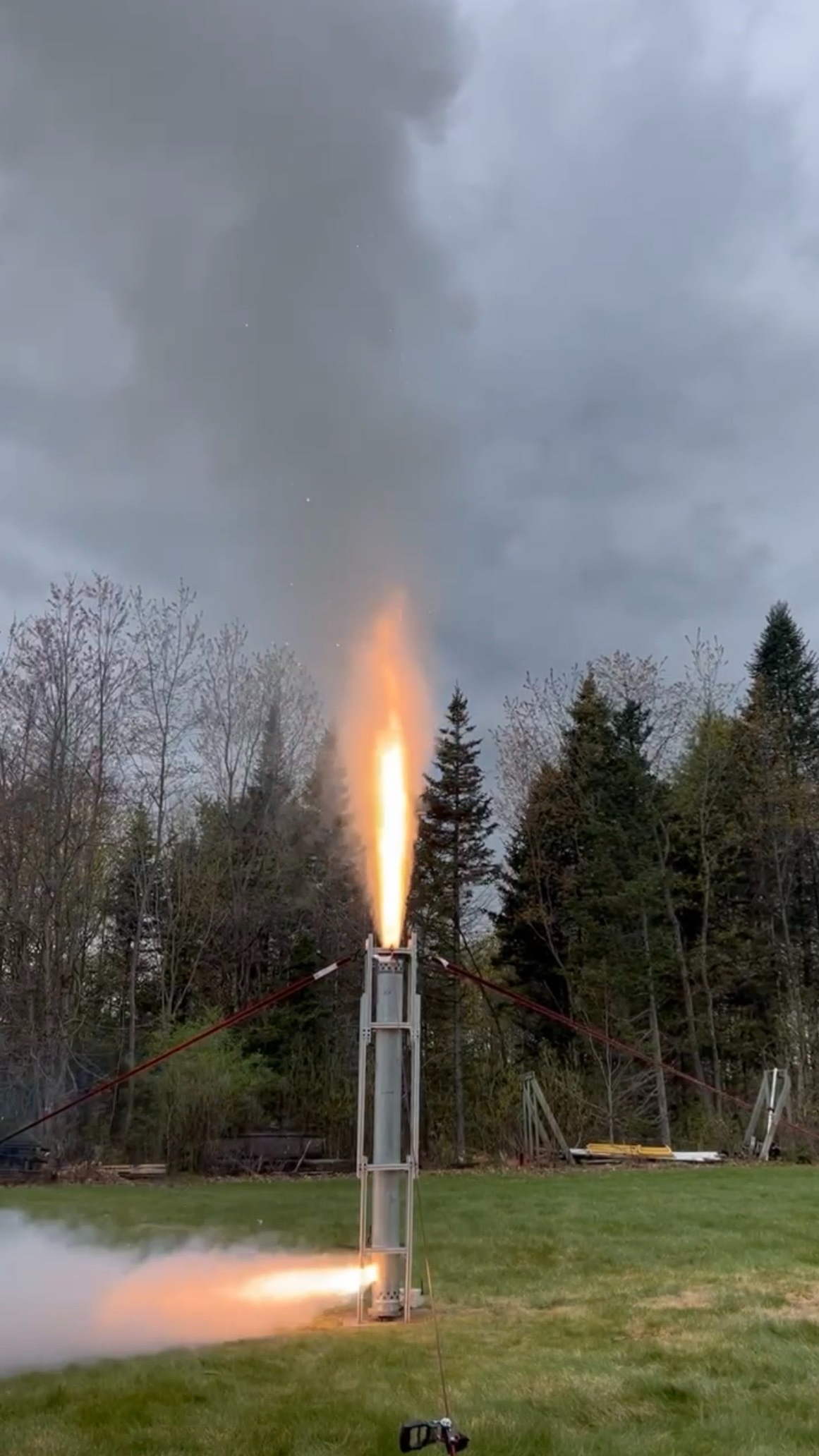
("Persephone II" Static Fire; left image T+1s; right image T+4s)
The team's next class of leadership will determine the path forward of the Zephyrus flight vehicle.
A summary of the vehicle characteristics (specific details accurate to February 2026) is listed in the FAA form 7711-2 COA supplemental form format here. More specific and up-to-date information is listed on the subteam pages. Note: As of 2025, the FAR launch site no longer requires a dedicated FAA 7711-2 COA (or supplement) for flights under 150,000 feet apogee. Sufficient documentation and testing to ensure that a flight vehicle is safe is still necessary.